
Stand-up paddleboarding (SUP) is a water activity in which you stand on a buoyant board and propel yourself with a single paddle. Beginners can pick up the basics in as little as half a day.Sheltered bays with little wind or swell are the easiest places to start SUP in Hong Kong. Sha Ha in Sai Kung and Lung Mei Beach in Tai Po are two popular launching areas. This guide covers SUP’s origins, four ways to enjoy it, board and paddle technique, local locations, equipment and safety considerations.
An Introduction to SUP
- Origins: The sport’s modern story is often traced to 1940s Waikiki, Hawaii. John Ah Choy developed a standing paddling technique when getting up on a surfboard became harder with age. His sons helped popularise it as a way for visitors to enjoy surfing.
- Features: SUP can be enjoyed without waves, is accessible to beginners and provides an open view from the board—ideal for sightseeing and photos.
- Why beginners enjoy it: A wide board offers a stable platform, and beginners can start kneeling while wearing a life jacket. It is one of the more accessible water activities.
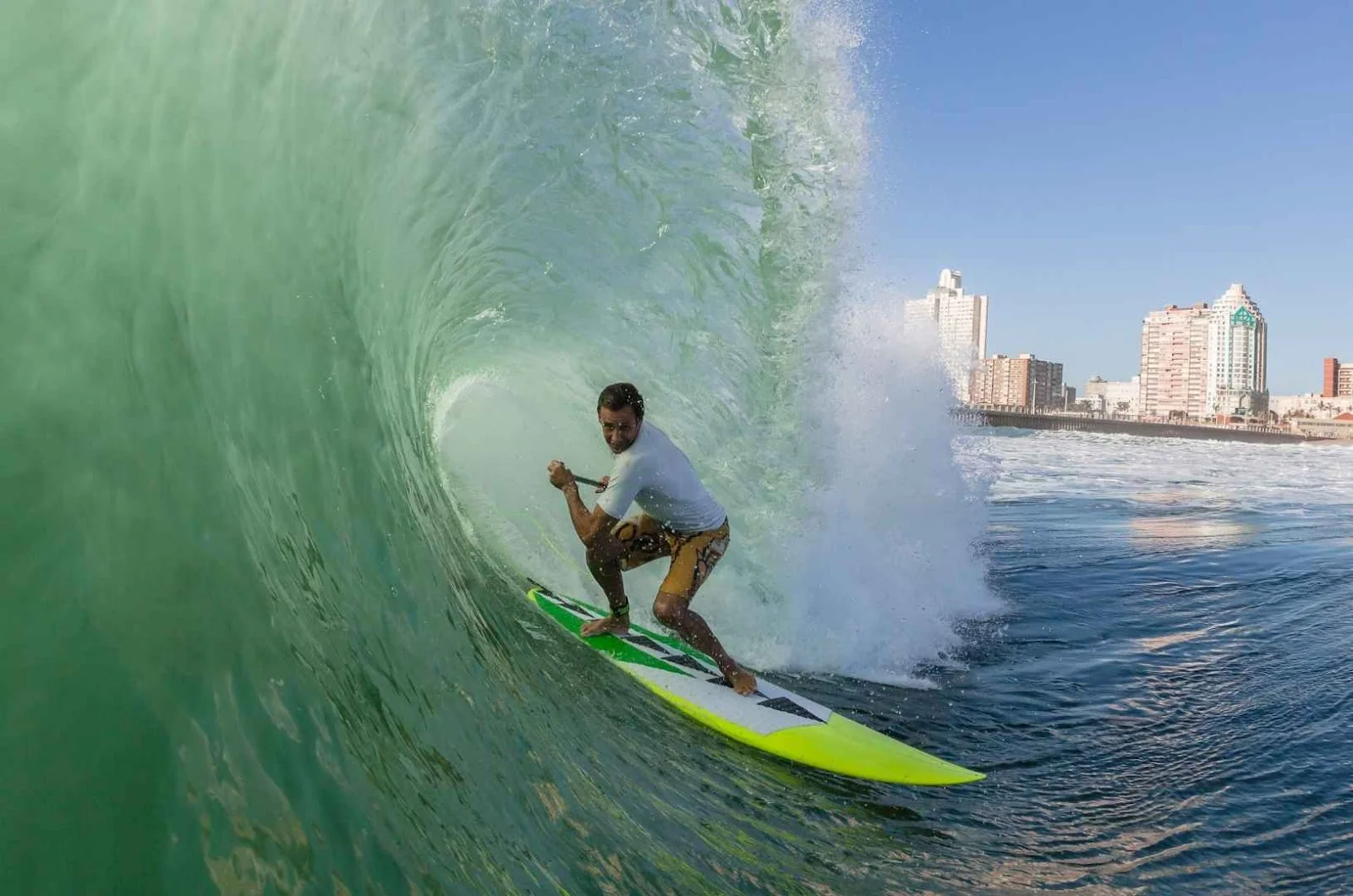
For surfers, SUP offers a way to enjoy the water even when there are no waves. For newcomers, it offers a chance to stand, paddle slowly and take in the scenery without needing surfing skills. Guided experiences and rental information below can help you plan your first outing.
Ways to Enjoy SUP
The board’s simple design opens up many possibilities. Here are four common ways to use it:
- SUP Touring: Explore the coastline at a steady pace. This is Hong Kong’s most common SUP activity and an accessible starting point, with longer trips possible as skills develop.
- SUP Surfing: Ride waves on a SUP—the sport’s original style. It is more demanding and should only be attempted with suitable experience.
- SUP Yoga: Practise yoga stretches and balance on a paddleboard. For an instructor-led experience, explore SUP yoga in Sai Kung, including the itinerary, available dates and price per person, and book directly on the activity page. For a closer look at the practice, read our guide to SUP yoga benefits, 17 movement groups and what to prepare.
- SUP Fishing: Paddle a stable board slowly to a fishing spot and enjoy a quiet session.
SUP Techniques
Adjusting Paddle Length
- Adjustable paddles need different lengths for standing and kneeling.
- How to adjust:
- Rest the paddle on the ground and release the adjustment lock.
- Extend it until your wrist can rest on the T-grip with your arm reaching vertically overhead.
- Close the lock securely.
- Blade direction: The angled blade should face forward, away from your body. Holding it backwards is a common beginner mistake that makes paddling harder.
Getting onto the Board
- For beginners: Start kneeling and attach your leash so the board does not drift away after a fall. When standing, place your feet shoulder-width apart on either side of the board’s central handle.
- Safety tips:
- Avoid falling in shallow water near the shore, where rocks can cause injuries.
- If you lose balance, fall into clear water to either side rather than directly towards the nose or tail.
- Look ahead at the horizon rather than down at your feet; looking down makes balancing harder.
- Paddling posture:
- Keep your knees slightly bent and your centre of gravity low.
- Submerge the blade to its neck, then draw it back alongside the board to your body at a steady rhythm.
- Switch sides every few strokes to help maintain a straight course.
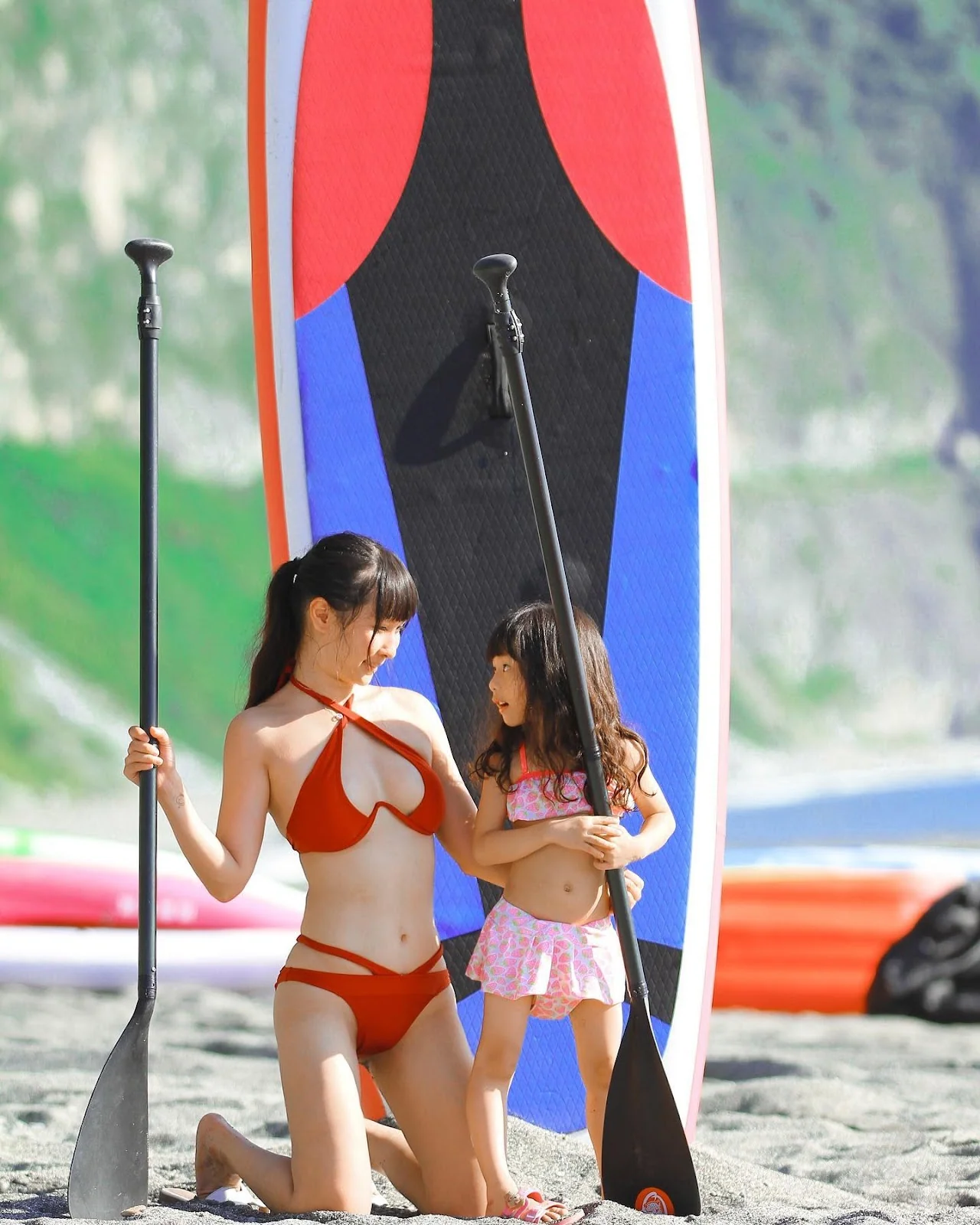
Beginner Equipment Checklist
You do not need to buy everything for your first session. Rental packages usually include a board, paddle, life jacket and leash. Consider preparing the following items:
- Life jacket (essential): Wear one, especially if you cannot swim or are leaving sheltered water.
- Leash: Connects the board to your ankle to stop wind and waves carrying it away after a fall. It is a key safety item.
- Sun protection: Bring water-resistant sunscreen, a hat and sunglasses. Reflections from the water can intensify exposure. See our rash guard buying guide.
- Quick-drying clothing and footwear: You will get wet, so bring a change of clothes along with suitable water footwear.
- Dry bag: Use it for your phone and wallet and secure it to the board’s handle.
Popular SUP Locations
SUP takes balance, so it is easier to learn in light winds and small waves. The following sheltered areas are popular starting points:
Lung Mei Beach, Tai Po
Lung Mei lies near the Plover Cove reservoir dam and Ma Shi Chau, which help shelter the area. It is a popular place for a first SUP session. The original guide notes concerns about water quality since the artificial beach opened and reports of injuries from marine animals such as bristle worms and scorpionfish, so pay attention to marine life when entering the water.
Sha Ha, Sai Kung
Sha Ha is close to Sai Kung town, with attractive water and generally modest waves. Check the Hong Kong Observatory’s wind forecast before launching: light winds around Beaufort force 1–3 are easier for beginners, while stronger winds make paddling harder. With little shelter to the east, Sai Kung is more exposed during easterly winds, and wind can increase noticeably once you leave Sha Ha. The coastline remains a major attraction. For directions, see our Sai Kung transport guide.
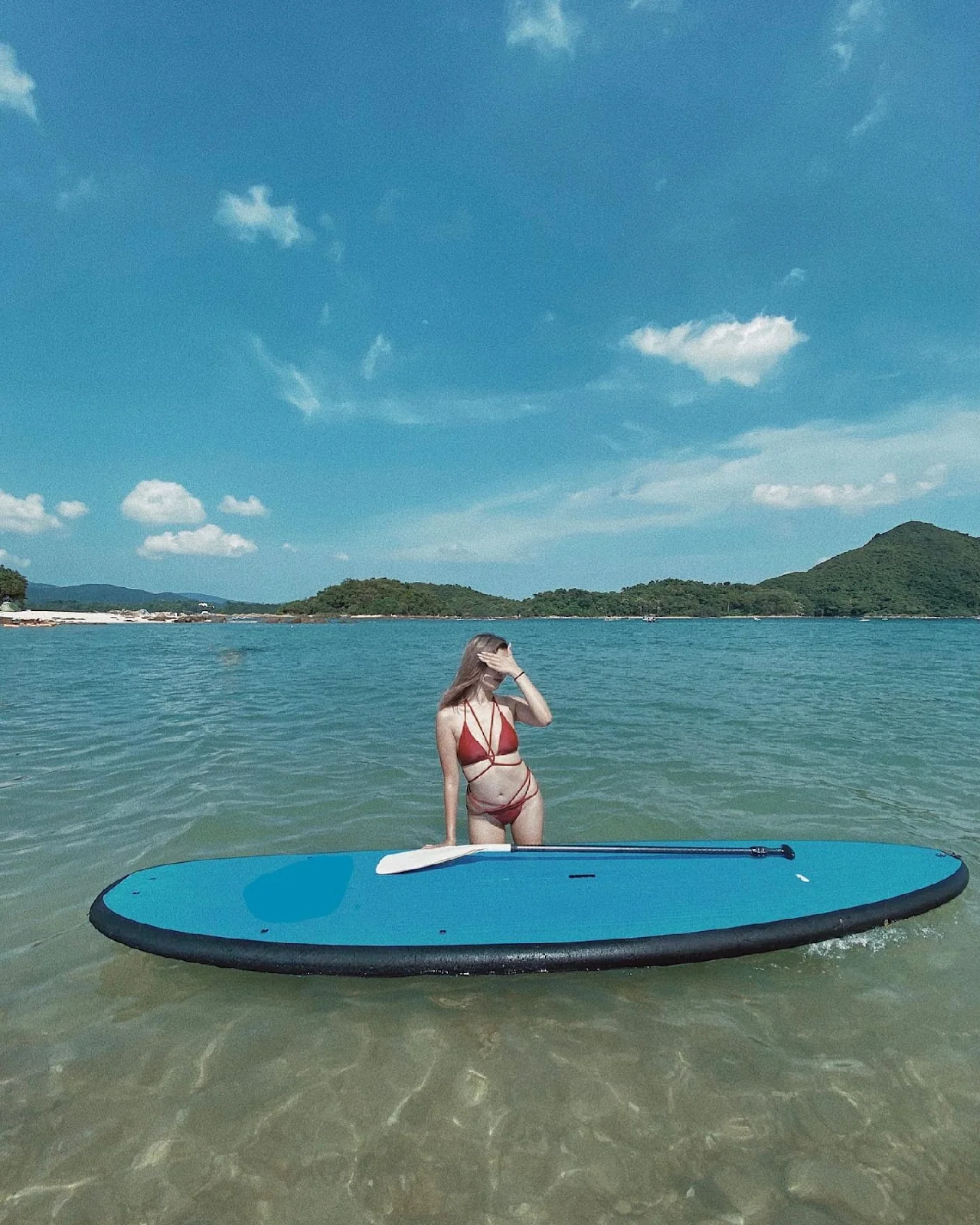
Beginner FAQ
Can I try SUP if I cannot swim?
A life jacket, suitable leash and calm, sheltered water allow you to start from a kneeling position. An introductory class with an instructor is recommended for non-swimmers.
Is SUP or kayaking easier?
Both can suit beginners. Kayaking keeps you seated with a low centre of gravity, while SUP provides a higher viewpoint but requires balance. Choose a kayak if you are concerned about falling in, or SUP if you prefer standing to enjoy the view. For a comparison, see our guide to kayaking and canoeing terms.
How long does it take to learn the basics?
Most people can progress from kneeling to slow standing paddling within half a day, approximately 2–3 hours. Calm conditions make learning easier.
Ready to Try SUP in Sai Kung?
Kayarine offers instructor-led SUP tours and kayak experiences in Sai Kung. To plan your own paddling outing, explore Sai Kung kayak and SUP rentals. Self-guided rentals include equipment and a basic pre-departure safety briefing, without an instructor accompanying you throughout.