
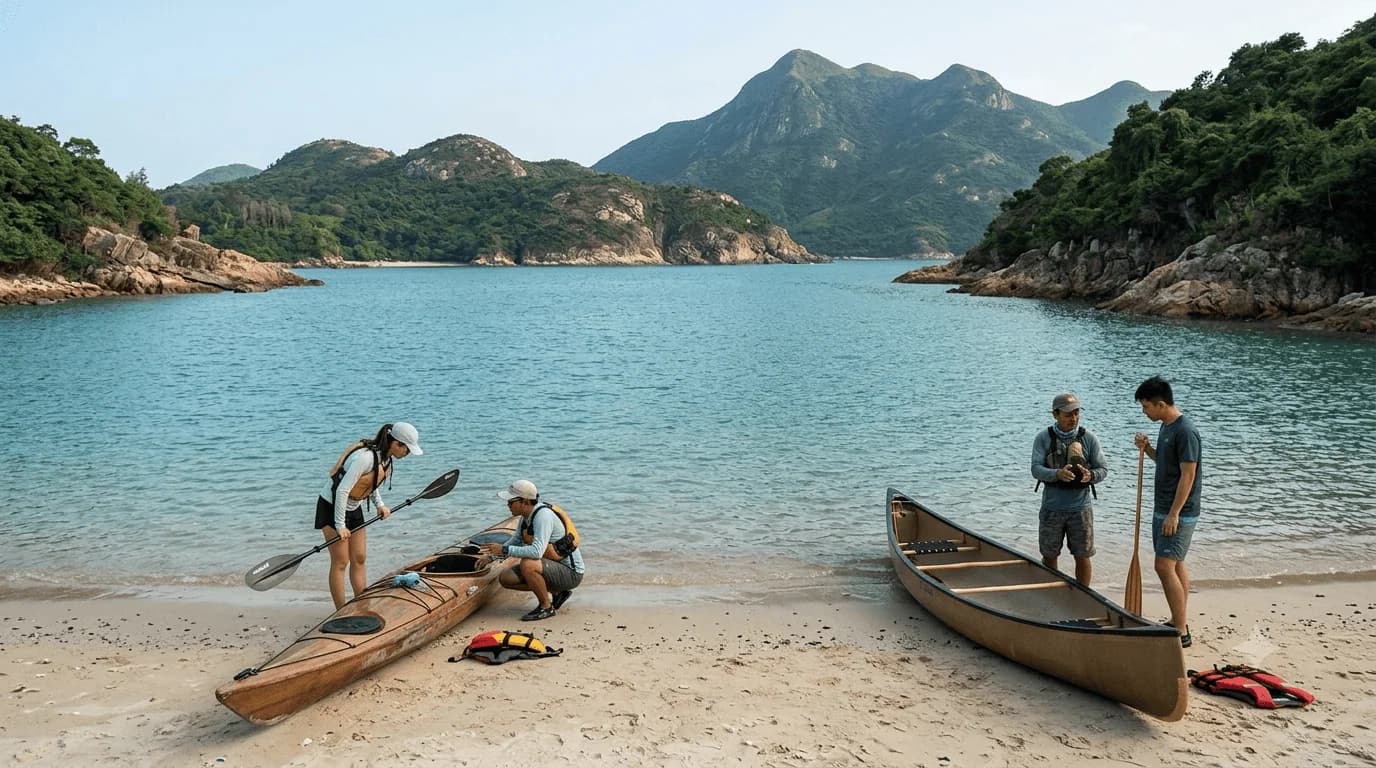
What is the difference between the Chinese terms for kayaking and canoeing? Many people in Hong Kong find the terminology confusing when booking their first water activity. Some assume they describe entirely different sports; others think only the names differ. The answer lies somewhere in between. Understanding the equipment helps you choose an experience that suits you.
Kayarine has taken more than 10,000 participants onto the water in Sai Kung. Here are answers to the questions we hear most often.
Kayaks, Canoes and SUP at a Glance
| Feature | 🚣 Kayak | 🛶 Canoe | 🏄 Stand-Up Paddleboard (SUP) |
|---|---|---|---|
| Position | Seated in the kayak with legs extended | Kneeling or seated in an open canoe | Standing on a board |
| Paddle | Double-bladed paddle | Single-bladed paddle | Single-bladed paddle used standing up |
| Stability | High; accessible for beginners | Moderate; balance required | Moderate; core strength required |
| Availability in Hong Kong | ⭐⭐⭐⭐⭐ Most common | ⭐⭐ Less common | ⭐⭐⭐⭐ Common |
| Sai Kung experience prices | HK$300–500 per person | Harder to book in Hong Kong | HK$200–350 per person |
What Do Hong Kong’s Paddling Terms Actually Mean?
In Hong Kong, the Chinese terms often translated as kayaking and canoeing usually refer to the same equipment: a kayak, paddled from a seated position with a double-bladed paddle. The Mandarin and Cantonese terms differ, but local water-activity providers generally use them to describe the same craft.
Open canoes with single-bladed paddles are less common in Hong Kong and are not widely offered by activity centres. A search for either Chinese term will usually lead you to kayak experiences and rentals.
Should Beginners Choose a Kayak or SUP?
This is one of the questions Kayarine instructors hear most often. In brief:
- Kayak — A seated position lowers your centre of gravity and provides stability. Kayaks are a popular choice for first-timers, children, older participants and outings with pets. Kayarine’s 2+1 family kayaks have a dedicated seat and can accommodate a pet.
- Stand-up paddleboard (SUP) — Paddling while standing takes core strength and balance. People who enjoy yoga, fitness or a little more of a challenge may prefer it.
More than 80% of Kayarine guests are trying water activities for the first time. Instructors provide a 15–20-minute safety briefing and introduction to paddling before departure; previous experience is not required.
Kayaking in Sai Kung: Where to Go and How to Book
Sai Kung is a favourite Hong Kong kayaking destination, with more than 70 islands and secluded beaches, clear water and the scenery of the Hong Kong UNESCO Global Geopark.
Kayarine is based at Sai Kung Waterfront Park and offers the following options:
| Service | Duration | Price per person | Suitable for |
|---|---|---|---|
| 🚣 Self-guided kayak rental | From 1 hour | HK$300–500 | Beginners and other participants |
| 🗺️ Guided tours (Ha Chau and Pak Sha Chau) | 3–6 hours | HK$450–650 | Exploring secluded beaches |
| 🏄 Self-guided SUP rental | From 1 hour | HK$200–350 | Participants with basic balance |
| 📜 ISA-recognised SUP courses | 3–4 hours | Depends on the course | Working towards an internationally recognised certificate |
All activities include a life jacket, paddle and safety briefing. Rescheduling is free when the weather is unsuitable, and a full refund is available for an Amber Rainstorm Warning or above.
👉 View kayak rental details | Browse all Sai Kung water activities | Pak Sha Chau beginner SUP class | Pak Sha Chau family kayak tour
Frequently Asked Questions (FAQ)
Do Hong Kong’s Chinese terms for kayaking and canoeing mean the same thing?
In Hong Kong’s activity market, they generally do: both usually mean a small kayak paddled from a seated position with a double-bladed paddle. An open canoe uses a single-bladed paddle, but local Chinese terminology often overlaps. Most equipment offered under these names is a kayak.
What should a first-time kayaker prepare?
Kayarine provides equipment, including life jackets, paddles and waterproof phone pouches, plus a 15–20-minute safety briefing before departure. Wear quick-drying clothing and bring sun protection rated SPF 30 or above and 500 ml of drinking water. Swimming ability is not required, but participants should be in good health and have no serious heart condition.
Can I bring a pet kayaking in Sai Kung?
Yes. Kayarine offers 2+1 family kayaks with a dedicated seat for a pet. Bring a properly fitting pet life jacket and tell the team in advance so suitable equipment can be arranged. Kayarine is one of Sai Kung’s providers of pet-friendly kayaking experiences.
Which is easier to learn: kayaking or SUP?
Kayaking is usually easier for beginners because the seated position lowers the centre of gravity and improves stability. Standing on a SUP places more demands on balance and core strength. More than 80% of Kayarine guests are beginners, and both activities can be introduced with a 15–20-minute briefing.