
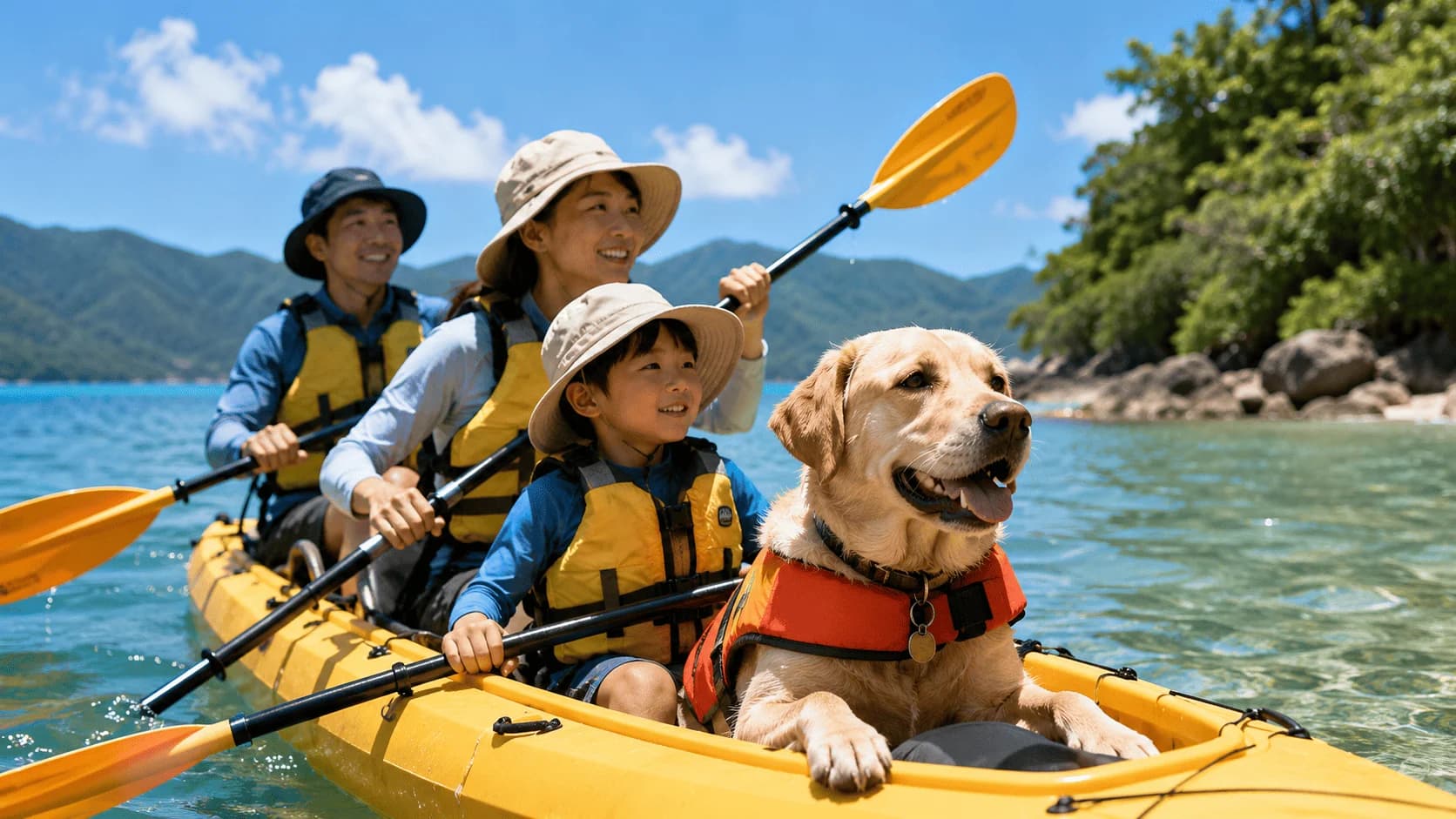
Can Children and Pets Go Kayaking?They can take part in suitable circumstances, but safety depends on the individual, the equipment, supervision and conditions. In brief:Young children are generally better introduced in an adult-accompanied tandem kayak or a guided family session. For dogs, a stable, wide kayak or SUP may be suitable after careful preparation. Use appropriate life jackets, avoid entanglement hazards and choose a sheltered route assessed for waves and boat traffic.Below, we look at routes, equipment, sun protection and practical precautions.
Kayarine has introduced thousands of guests to Sai Kung’s waters over more than five years, including families and visitors with dogs. These tips draw on that experience, including common mistakes worth avoiding.
Family and Pet Activities at a Glance
| Participant | Suggested activity | Area to discuss with the provider | Indicative difficulty |
|---|---|---|---|
| Young children, around 4–8 years | Adult-accompanied tandem kayak or family tour | Pak Sha Chau or sheltered Sha Ha routes | ★☆☆ |
| Older children, around 9–14 years | Family SUP or supervised single kayak, if suitable | Pak Sha Chau or sheltered Sharp Island routes | ★★☆ |
| Small dogs | Wide tandem kayak with the owner | Short route in sheltered, calm conditions | ★★☆ |
| Medium or large dogs | Wide SUP, with the dog settled towards the front | Short near-shore route in calm conditions | ★★★ |
Is Kayaking Suitable for Children?
It can be, but three requirements are essential. First, a correctly fitted child’s life jacket. An oversized adult jacket may slip off or fail to support a child properly. Select a suitable weight rating and fasten all straps, including any crotch strap, according to the manufacturer’s instructions. Second, close adult accompaniment. For younger children, discuss a tandem arrangement with the provider. Older children should only try a single kayak when their ability, confidence and supervision make it appropriate. Third, a suitable sheltered route. Sha Ha and Pak Sha Chau may offer options, but no bay is guaranteed wave-free, shallow or free of boat traffic; the day’s conditions must be assessed.
- Before launching: Check the life-jacket fit, practise the instructor’s capsize instructions and agree on signals and a turnaround point.
- Keep the session short: Young children may tire or lose concentration quickly. Start with a short outing rather than treating a 20–30-minute one-way route as a target, and return early if the child is hot, tired or distressed.
- Equipment: Bring water shoes, sun-protective clothing, a hat, drinking water and dry clothes in a waterproof bag.
Prefer help from an experienced instructor? Consider the Pak Sha Chau Family Kayaking Tour or a family SUP session, with equipment and guidance provided. Check the booking page for current age limits and participation requirements.
Can Dogs Go Kayaking or SUP?
Some healthy, calm dogs enjoy time on the water, but preparation on land matters more than simply choosing a board. Kayarine does not currently offer a dedicated pet tour. Guests considering a dog-friendly outing should discuss rental arrangements with us in advance, including whether their dog and chosen equipment are suitable. Knowing your dog well helps, but does not remove the risks. Prepare the following:
- Dog life jacket: Choose a well-fitting model with a lifting handle and adequate support. Even dogs that swim can tire or panic; practise a safe recovery with help before venturing out.
- Get comfortable on land: Let your dog become familiar with the board or kayak in a safe shore setting, then introduce gentle movement gradually. Do not make the first attempt a trip offshore.
- Choosing equipment: A wide SUP can provide space for a settled dog, while a wide tandem kayak may allow the dog to sit in front of the owner. Narrow racing craft are not a suitable starting point.
- Lead management: Discuss a lead arrangement that prevents uncontrolled jumping without creating an entanglement risk. Never tie the dog to the craft. You must be able to release any lead immediately if necessary; a capsize can turn a fixed tether into a serious hazard.
- Nails and grip: Keep nails appropriately trimmed to protect surfaces, especially inflatable boards. A suitable non-slip mat may help a dog feel steadier on a hard-shell kayak.
⚠️ When to stop: Hot decks and board surfaces can burn paws. Avoid intense midday heat, bring fresh water and a bowl, and watch for heavy panting, trembling or attempts to jump off. Return to shore if the dog is uncomfortable. Never force a fearful or unsuitable dog to participate.
Ask about equipment through our Sai Kung kayak and SUP rental service. Wide boards and tandem kayaks may be available; confirm pet arrangements and suitable equipment before booking.
Routes to Discuss for Families and Pets
Sheltered Pak Sha Chau Routes
In appropriate conditions, a short guided route around sheltered parts of Pak Sha Chau can be considered for beginners and families. Plan accessible rest points and assess traffic, tide and weather; do not assume a guaranteed easy landing or calm water. Check the actual meeting point and route of your chosen Kayarine session.
Sha Ha: Short Introductory Practice
Suitable near-shore routes can give families time to paddle slowly and appreciate the coastal environment. Conditions still need checking. For route ideas and precautions, see Sai Kung Sha Ha Kayaking Routes.
Sheltered Sharp Island Routes: More Experienced Families
A longer trip may suit older children who are comfortable on the water, with snorkelling where conditions and supervision allow. Consider the Sharp Island Kayak and Snorkelling Experience with an instructor rather than navigating unfamiliar boat traffic independently. For a first dog outing, keep the route short instead of aiming for a distant island.
Sun Protection for Families and Dogs
Direct sun and reflected light from the water increase exposure. Plan protective clothing, shade and breaks rather than relying on sunscreen alone.
- Start with clothing and shade: For children, consider UPF50+ long sleeves, a suitable hat and sunglasses. For clothing advice, see our Hong Kong Water-Sports Rash Guard Guide.
- Sunscreen: Use an appropriate water-resistant sunscreen according to its label, applying before exposure and reapplying as directed, especially after swimming or towelling. For babies, prioritise shade and protective clothing and seek professional advice about suitable sun protection.
- Sun protection for dogs: Short-haired or pale dogs and exposed areas such as ears and noses may need extra protection. Ask a vet about a pet-safe product; do not apply human sunscreen without veterinary advice, especially products containing zinc oxide or PABA that may be harmful if licked. Avoiding strong sun and providing shade remain important.
- Fresh water: Carry enough fresh drinking water for both people and dogs, and stop if anyone shows signs of overheating or distress.
Seasonal Planning
| Season | Planning outlook | Family and pet considerations |
|---|---|---|
| Autumn–winter: October–February | ★★★ Potentially comfortable, conditions permitting | Cooler air may be more comfortable, but monsoon winds and cold water still matter. Pack warm, dry clothing and assess the sea rather than assuming it is calm. |
| Spring: March–May | ★★☆ Possible in suitable weather | Humidity, fog and changing weather can affect visibility. Check the forecast and watch for thunderstorms. |
| Summer: June–September | ★☆☆ Extra care needed | Heat and strong sun increase risk. Consider cooler hours only when conditions are suitable, monitor typhoon warnings and be especially cautious about dogs overheating. |
👉 Book Sai Kung water activities
Frequently Asked Questions
How old should a child be to try kayaking?
This guide uses around four years as an introductory example, not a universal minimum age. The provider’s rules, a correctly fitting life jacket, ability to follow instructions and close adult supervision are more important than age alone. Confirm eligibility and choose a guided family session for a first outing.
How should I prepare a dog for a first trip?
Introduce the craft on land first and fit a suitable dog life jacket. Discuss a stable board or kayak and a short, sheltered route with the provider. Bring fresh water, avoid entanglement hazards and return promptly if the dog becomes distressed. Do not force participation.
Is a capsize dangerous for a child?
A capsize can be dangerous, even in apparently shallow or sheltered water. A correctly fitted life jacket, close supervision and a practised recovery plan reduce risk but do not remove it. Before launching, follow the instructor’s guidance on staying with the craft and signalling for help.
Can families and dogs go out in summer?
Only when conditions and the participants are suitable. Avoid intense heat, plan sun protection and hydration, and check weather warnings. Cooler hours can help but do not guarantee safety. Dogs are particularly vulnerable to overheating, so be ready to shorten or cancel the outing.
Does Kayarine offer dedicated pet tours?
Not currently. If you want to bring a dog through the rental service, contact Kayarine first to confirm suitability, equipment and arrangements. Guided family kayak and SUP sessions are available for people; check the relevant booking page for current requirements.