
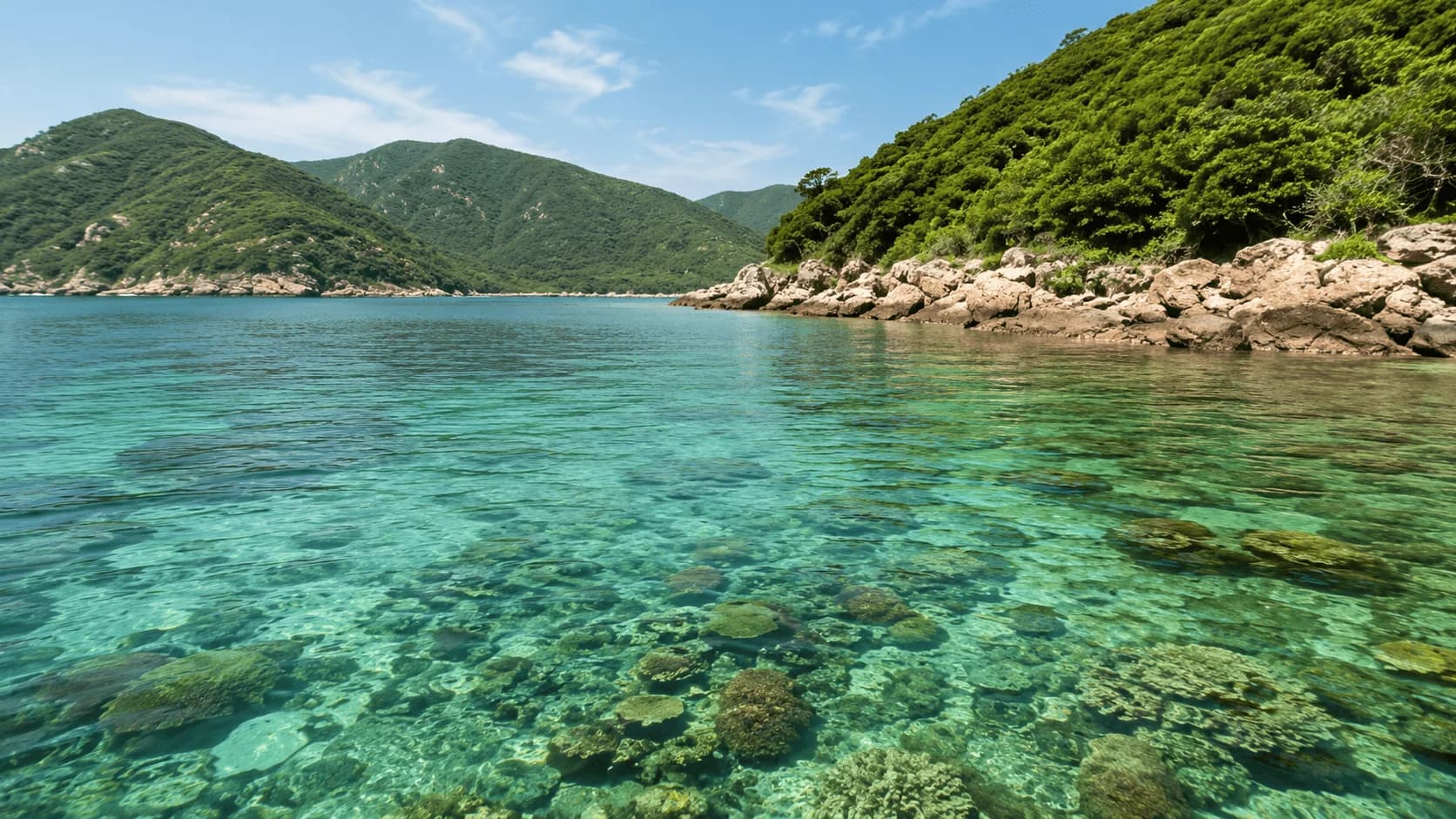
Hoi Ha Wan, north of Sai Kung, is a protected marine park known for coral communities and fish in its coastal shallows. Conservation rules help protect this valuable habitat, but clear water and quiet conditions are not guaranteed all year. A well-planned visit can offer a rewarding introduction to Hong Kong’s marine life.
Kayarine has guided thousands of visitors on Sai Kung’s waters for more than five years. Our kayak and snorkelling activities mainly operate around Sharp Island and Pak Sha Chau, not Hoi Ha Wan, which has separate park management and local providers. This guide draws on general guiding experience to help you plan responsibly and understand the rules you need to check.
👉 Quick overview: One public-transport option is green minibus 7 from Sai Kung to Hoi Ha Village, followed by a walk to the shore. Local rental arrangements should be confirmed directly. The original guide gives a reference of HK$100–200 per kayak for half a day, not a guaranteed current price. For coral observation, consider a glass-bottom craft or a suitable guided snorkel, without touching or crossing over shallow coral. In the park, do not fish, collect coral, feed fish or anchor outside designated areas. Check the current AFCD visitor rules and on-site signs.
Hoi Ha Wan at a Glance
| Item | Details |
|---|---|
| Location | Hoi Ha Village and Hoi Ha Wan Marine Park, northern Sai Kung |
| Area | Around 260 hectares; designated as a marine park in 1996 |
| Highlights | Coral communities, fish, mangroves and coastal habitats |
| Activities to consider | Kayaking, glass-bottom craft, snorkelling and ecological tours, subject to rules and conditions |
| Transport | Check green minibus 7 from Sai Kung town to Hoi Ha Village |
| Rental budget | Original reference: HK$100–200 per kayak for half a day; confirm current rates |
| Suitable visitors | Families, beginners and ecology enthusiasts when the actual activity and supervision are appropriate |
| Important | Marine-park regulations apply, including restrictions on fishing, collection and anchoring. |
Why Is Hoi Ha Wan Special?
Designated in 1996, Hoi Ha Wan was among Hong Kong’s first marine parks. Its sheltered coastal habitats support substantial coral communities and a variety of fish. Shelter does not mean risk-free water: tides, weather and visibility still affect how visitors can explore.
Mangroves and other coastal habitats add to the ecological interest. WWF operates the Hoi Ha Marine Life Centre and offers educational programmes with glass-bottom boat coral observation. Check current booking arrangements. Seeing coral does not require deep diving, but the activity and viewing position still need to protect both the visitor and habitat.
Getting to Hoi Ha Wan
There is no direct railway service. Plan the final road journey and return transport before setting out:
- Minibus: Travel to Sai Kung town and check green minibus 7 towards Hoi Ha Village. The guide estimates around 30–40 minutes, but traffic and service intervals vary. Confirm current departures and the final return service.
- Driving: Access passes through country-park roads with vehicle restrictions. Do not assume private-car access to Hoi Ha Village is permitted; check the current permit rules and legal parking arrangements before driving.
- Taxi or arranged transport: A taxi from Sai Kung can be useful for a group with equipment. Confirm where the vehicle may legally go and arrange the return rather than assuming one will be waiting.
For the first part of your journey, see the Sai Kung Transport Guide, covering MTR connections, buses and minibuses.
Kayak Rental: What Beginners Should Ask
Local shops may offer kayak rental, but confirm availability, opening hours and inclusions before travelling. Ask about the following:
Prices and Craft Choices
- Single or tandem kayak: A family or beginner pair may consider a tandem kayak, if seating and weight limits suit them and they can coordinate. A single sit-on-top is another option for an appropriately assessed paddler; neither type is capsize-proof.
- Glass-bottom kayak: Ask whether a transparent-bottom model is available and suitable for your group. It may offer underwater views without entering the water, but visibility and access to viewing areas vary.
- Price: The original reference is HK$100–200 per kayak for half a day. Confirm the actual rate, permitted duration, deposit, equipment, briefing and return time directly.
Equipment Checklist
- Life jacket or suitable buoyancy aid: Confirm a correctly fitting model is provided and wear it throughout as instructed.
- Sun-protective clothing and dry bag: Long sleeves help reduce exposed skin. Use suitable sunscreen as directed where needed; environmental labels alone are not a guarantee. Protect phones and valuables against water.
- Water shoes: Help protect feet at suitable shore entry points. Do not stand on coral or enter unsafe shallows simply because you are wearing shoes.
- Snorkelling equipment: Use a well-fitting mask and suitable snorkel. Fin choice and technique should be assessed by the guide, with enough clearance to avoid coral; do not assume that removing fins makes every area safe.
- Drinking water: Bring enough water and snacks, including a reserve, rather than relying on village supplies.
For clothing advice, see the Hong Kong Water-Sports Rash Guard Guide. For introductory boat-handling and safety, the Hong Kong Kayaking Guide covers route choice, certificates and preparation.
Three Ways to Observe Coral Responsibly
Some coral communities are found in relatively shallow coastal water, so deep diving is not essential. The actual water depth changes with tide and location. Consider these options with a provider:
- Glass-bottom kayak or boat: Stay aboard while observing underwater life where visibility permits. WWF’s centre offers glass-bottom boat visits through its education programmes; confirm booking and suitability.
- Observation from a stable kayak: Remain balanced and use only a provider-approved viewing position outside sensitive shallow coral. Do not lean far over the side or improvise an unstable posture.Do not paddle directly across shallow coral, where the hull or blade may strike and damage it.
- Snorkelling: With suitable supervision, float horizontally at the surface and maintain clearance from coral. Never stand on it or push off with your feet.
⚠️ Conservation reminder: Coral is living habitat. Touching, trampling, stirring sediment or pushing against it with a paddle can cause damage. Keep a respectful distance and avoid any contact.
Marine Park Rules and Responsible Behaviour
Hoi Ha Wan is a regulated marine park. The following includes legal restrictions and conservation practices, and violations of applicable regulations can lead to enforcement. Check current AFCD rules rather than treating this summary as a complete legal guide:
- ❌ Fishing or collecting marine life — including shellfish, sea urchins and starfish, unless a specific lawful authorisation applies.
- ❌ Damaging or removing coral — leave fragments and other natural material where they belong.
- ❌ Feeding fish — avoid changing wildlife behaviour or introducing food to the habitat.
- ❌ Anchoring outside designated anchoring areas — anchors can directly damage coral; follow marked areas and current directions.
- ❌ Speeding in a motor vessel — the park has a vessel speed limit; follow the current rules and signs.
- ❌ Leaving rubbish — take all items and waste back with you.
In short: take photographs, leave the habitat undisturbed. Review AFCD’s official Hoi Ha Wan and marine-park visitor information before your trip.
Seasonal Planning: Visibility and Comfort
| Season | Water and visibility considerations | Planning outlook |
|---|---|---|
| Autumn: September–November | Water may remain comfortable and visibility can be good, but wind and swell still vary. | ⭐⭐⭐⭐⭐ A popular period when conditions suit |
| Summer: June–August | Warmer water, with typhoon, thunderstorm and heat risks. | ⭐⭐⭐⭐ Weather-dependent |
| Spring: March–May | Fog and humid weather can reduce visibility. | ⭐⭐⭐ Check local conditions |
| Winter: December–February | Colder water and northeast monsoon winds can limit activities. | ⭐⭐ Consider thermal protection and whether to cancel |
The original guide favours autumn, September–November, but no season guarantees clear, calm water. Summer requires particular attention to storms and heat; do not launch when warnings or the provider’s assessment advise against it.
Safety Before Entering the Water
⚠️ Safety first: Hoi Ha Wan is still coastal water. Wear suitable flotation, check current Observatory information and follow local guidance. Do not head out in thunderstorms, strong wind or large waves. Watch the tide so the kayak does not ground on coral, stay with an appropriately supervised group, and return with a margin before sunset.
Want a Guided Kayak-and-Snorkel Experience in Sai Kung?
Kayarine does not operate at Hoi Ha Wan. For an instructor-led kayak and snorkelling experience, consider our separate activity at Sharp Island. It combines paddling and marine observation where conditions permit, with the meeting point, equipment and participation requirements stated on the booking page.
Sharp Island Kayak and Snorkelling Experience
Instructor-led kayaking and snorkelling with the listed equipment, suitable for participants who meet the programme requirements. Marine sightings and water clarity vary.
👉 Browse Sai Kung water activities
Frequently Asked Questions
Can visitors swim and snorkel at Hoi Ha Wan?
Marine-park status does not automatically ban swimming or snorkelling. Follow current visitor rules, local signs, safe access arrangements and suitable supervision. Do not fish, collect wildlife, touch coral or stand on it. Weather and water conditions may still make an activity unsuitable.
Where can I rent a kayak, and should I book?
Ask local Hoi Ha Village providers about current rental availability and inclusions. The original guide’s reference is HK$100–200 per kayak for half a day, not a guaranteed quote. Contact the shop ahead of busy weekends, especially if you want a glass-bottom model or specific child-sized equipment.
Is it suitable for a first kayaking trip?
A suitable sheltered route may work with appropriate instruction and conditions, but the bay is not always calm. Tell the provider your ability, choose a conservative route and keep the life jacket on. Do not independently paddle beyond the bay mouth as a beginner.
When is coral viewing best?
Autumn is a popular choice, but visibility changes with weather, tide and other factors. Summer brings storm and heat concerns; winter can be cold and windy. Confirm conditions with the provider shortly before travel rather than relying on a seasonal rating.
How does Hoi Ha Wan differ from Sharp Island?
Hoi Ha Wan is a marine park in northern Sai Kung, with its own conservation management, access and local providers. Sharp Island is a different destination off Sai Kung town, where operators including Kayarine offer guided kayaking and snorkelling. Compare the actual route and arrangements rather than assuming they are interchangeable.
Related Articles
- Hong Kong Kayaking Guide: Routes, Certificates, Rental, Equipment and Safety
- Sai Kung Water Activities: Kayaking, SUP, Freediving and Squid Fishing
- Fire Stone Islet Freediving Guide
- Choosing a Rash Guard for Hong Kong Water Sports
- Sai Kung Transport Guide
- Sai Kung Day Trip: Family, Water-Sports and Seafood Routes