
Hong Kong Sunset Guide 2026: Sai Kung, the Western Coast, Islands and City Views
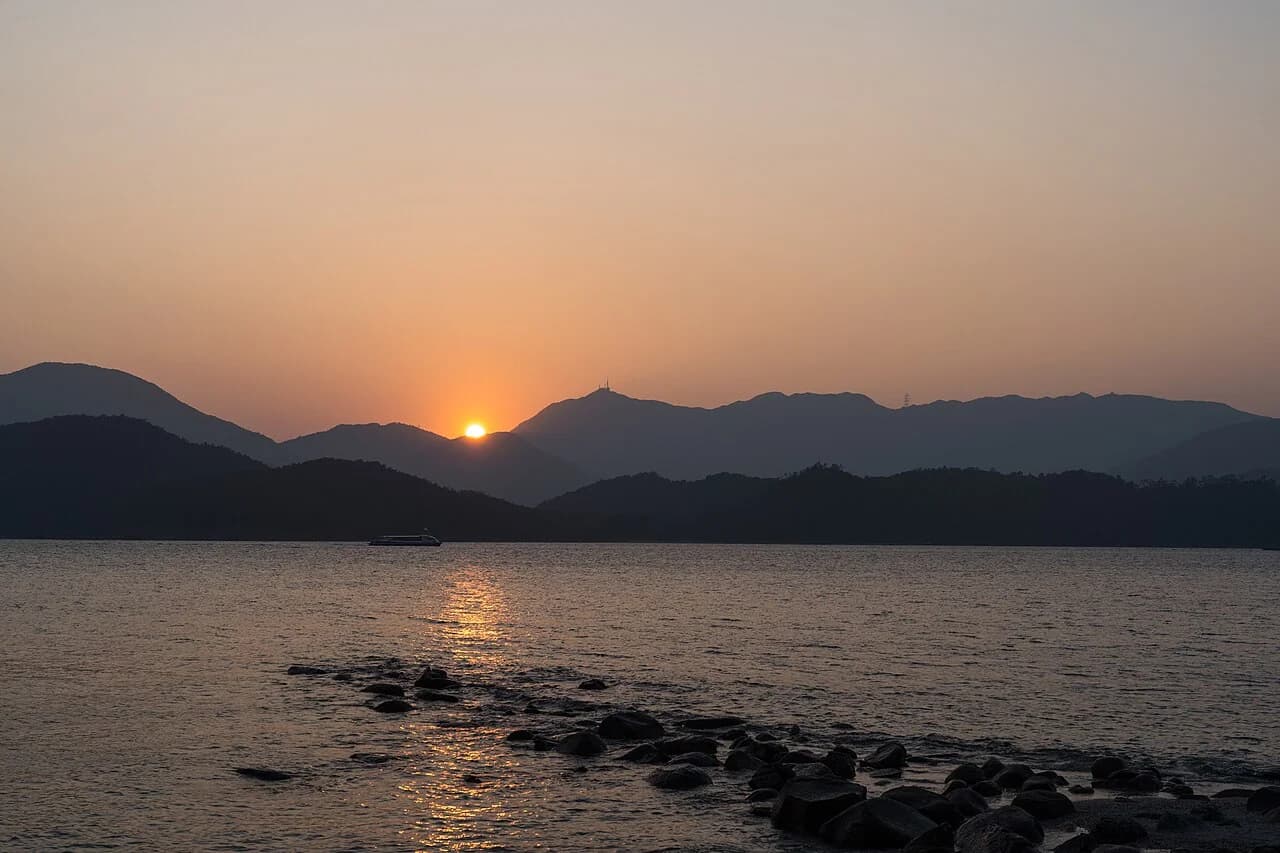
Hong Kong's strength as a sunset destination is its variety of landscapes in a compact area: sea reflections, island silhouettes, the Pearl River estuary and city skylines are all possible. The trick is matching the view to the location and season. From some positions the sun disappears behind a hill, not an open horizon.
Kayarine has run water activities in Sai Kung for over five years, introducing thousands of visitors to its coastline. This overview groups locations by the scene you want to see, with links to more detailed location and transport guides.
1. Four types of sunset outing
| Area | Visual character | Transport | Walking / access | Best for |
|---|---|---|---|---|
| Sai Kung | Sea reflections, bays and island silhouettes | ⭐⭐ Usually a connection or boat | ⭐ Shore routes to ⭐⭐ island visits | Coastal scenery and suitable guided water activities |
| Western New Territories | Westward views, estuary light and mudflat reflections | ⭐⭐ Rail plus local bus or minibus | ⭐ Many shore-based options | Open views and photography |
| Outlying islands | Sea views and a slower island atmosphere | ⭐⭐ Ferry required | ⭐ Some level routes; choose your location | Making sunset part of a half-day outing |
| City waterfronts | Skylines, promenades and evening lights | ⭐⭐⭐ Rail or local transport plus walking | ⭐ Accessible options vary by site | Short visits and after-work plans |
2. Sai Kung: evening light among islands
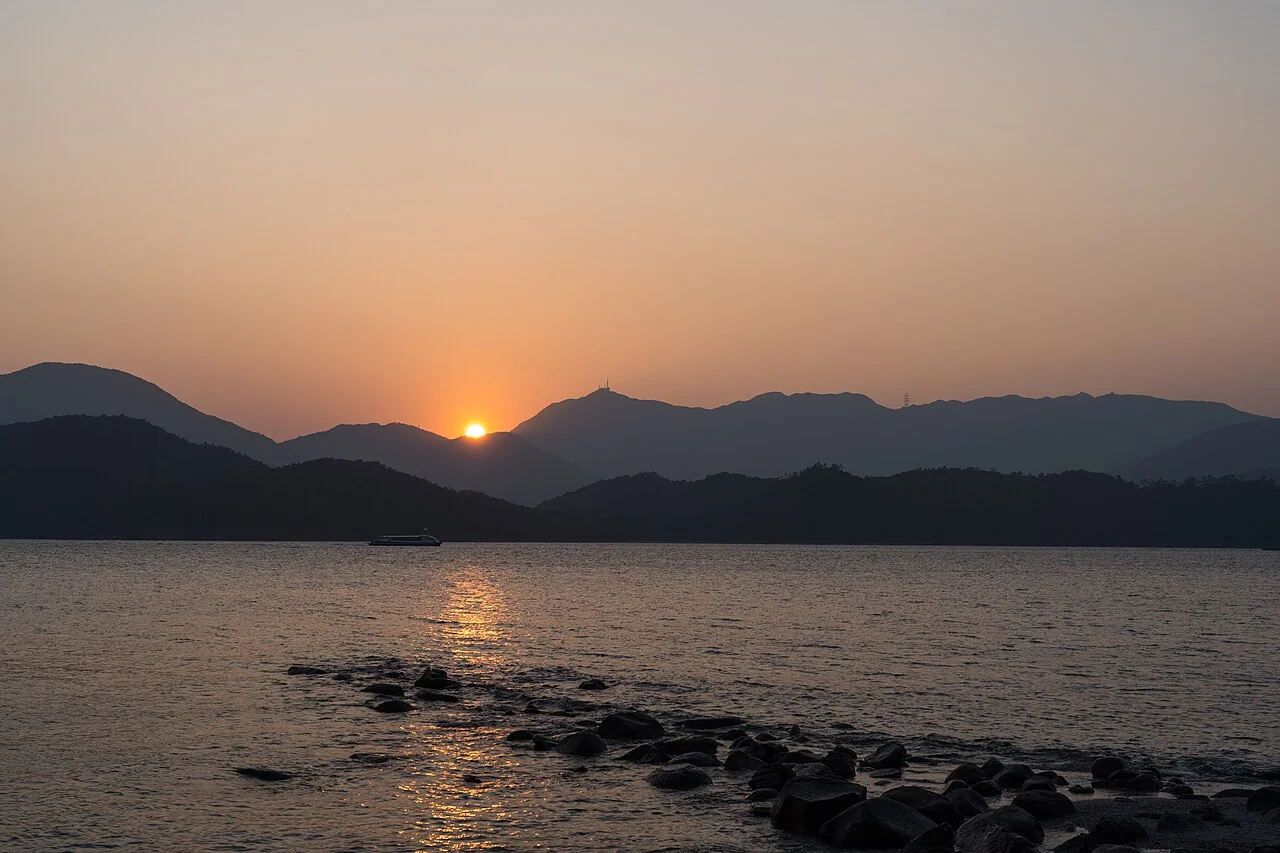
Sai Kung's appeal comes from its bays and island landscape. Low light reflects across the water, while headlands and islands provide foreground silhouettes. The exact sunset direction and any obstruction vary with the season and viewpoint.
- Sharp Island area: Shore viewpoints and surrounding waters offer evening coastal scenery, with geological features including the tombolo. Do not assume the sun sets into an unobstructed sea horizon from every position.
- Sha Ha and Pak Sha Chau: Coastal viewpoints and appropriately managed water activities can be combined with evening light. Access and conditions need checking.
- Tai Mong Tsai and Tui Min Hoi: Selected accessible shore sections offer views without an island crossing. Check the specific path and facilities for older visitors or children.
👉 See locations, access and transport in the Sai Kung sunset guide.
3. Western New Territories: broad westward views
Western shorelines provide broad views toward the Pearl River estuary. Lung Kwu Tan is known for its open outlook, while Ha Pak Nai offers reflections across wet mudflats when conditions align. Haze, nearby landforms, cloud and tide all affect the actual picture.
⚠️ An important distinction: Lung Kwu Tan and Ha Pak Nai are not casual swimming destinations. Lung Kwu Tan lacks a supervised bathing service, while Ha Pak Nai has sensitive mudflat habitat, soft ground and oyster shells. Plan both as shore-based visits, using established access and viewing areas.
👉 See viewpoints and transport in the western New Territories sunset guide. For responsible wildlife observation, see the dolphin and sunset guide.
4. Outlying islands: make an afternoon of it
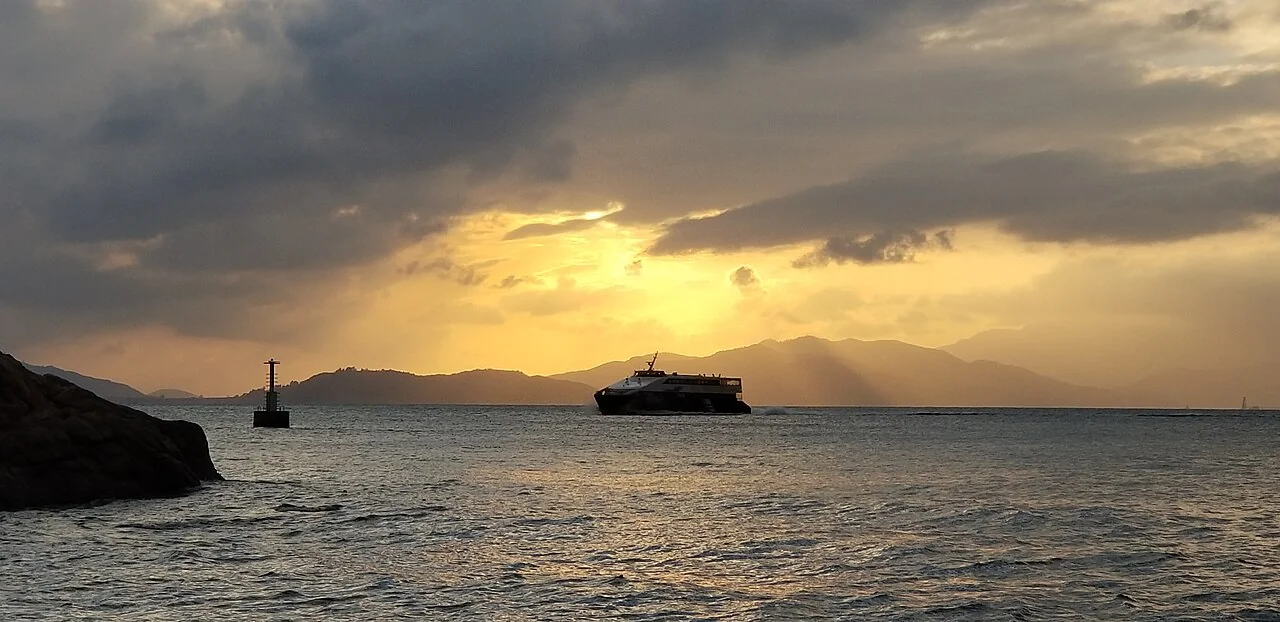
The appeal of an island outing is its pace: the ferry becomes part of the trip, with time to stroll or eat before sunset and a planned sailing home afterwards.
- Cheung Chau: Choose a west-facing shore location for the setting sun. The island has plenty of dining options; do not assume east-facing Kwun Yam Beach provides the same sunset angle.
- Lamma Island: Yung Shue Wan offers evening coastal views that can be combined with dinner, subject to your position and the seasonal sun direction.
- Lantau Island: Pui O and Cheung Sha have broad beaches that catch evening light. Hills and the seasonal sunset direction can affect whether you see the sun itself.
👉 For ferry planning and viewpoints, see the outlying islands sunset guide.
5. City waterfronts: an easy evening outing
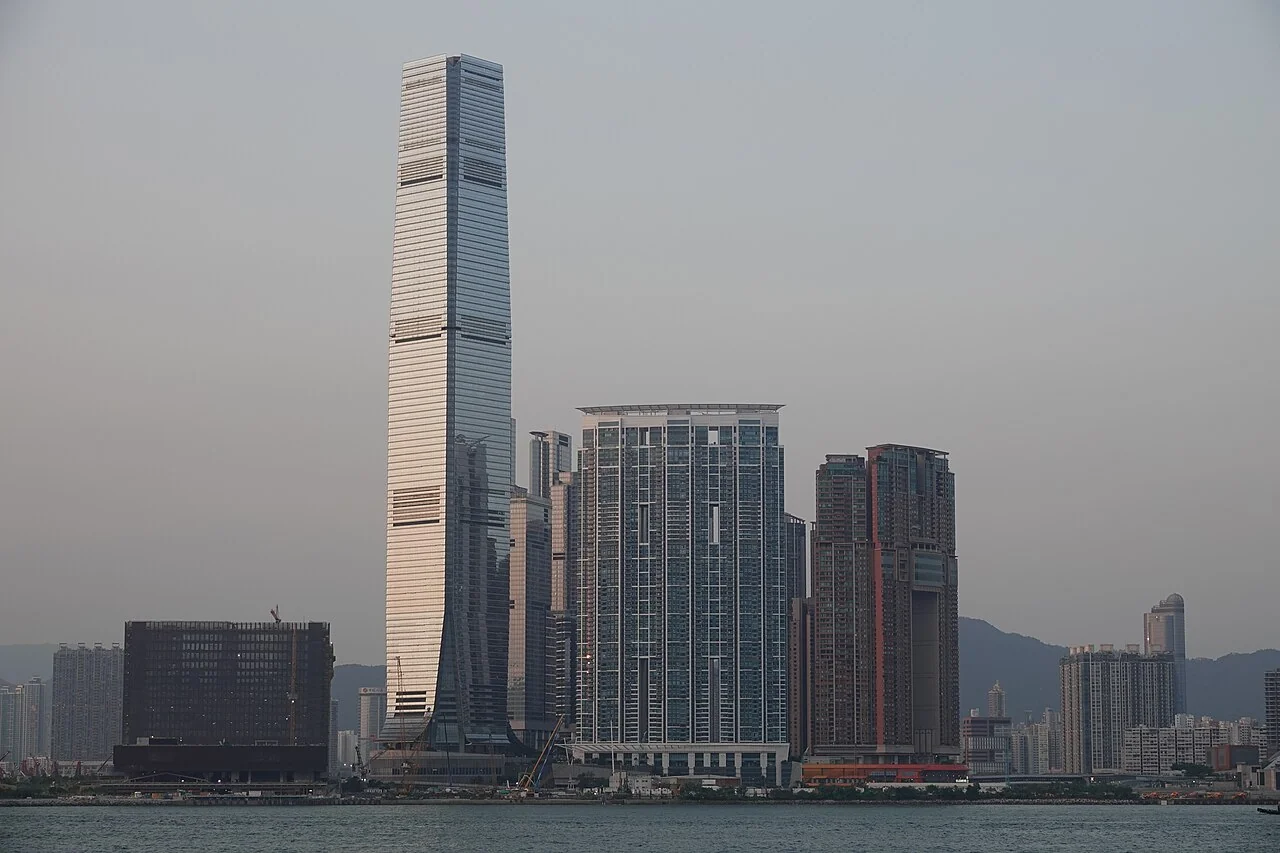
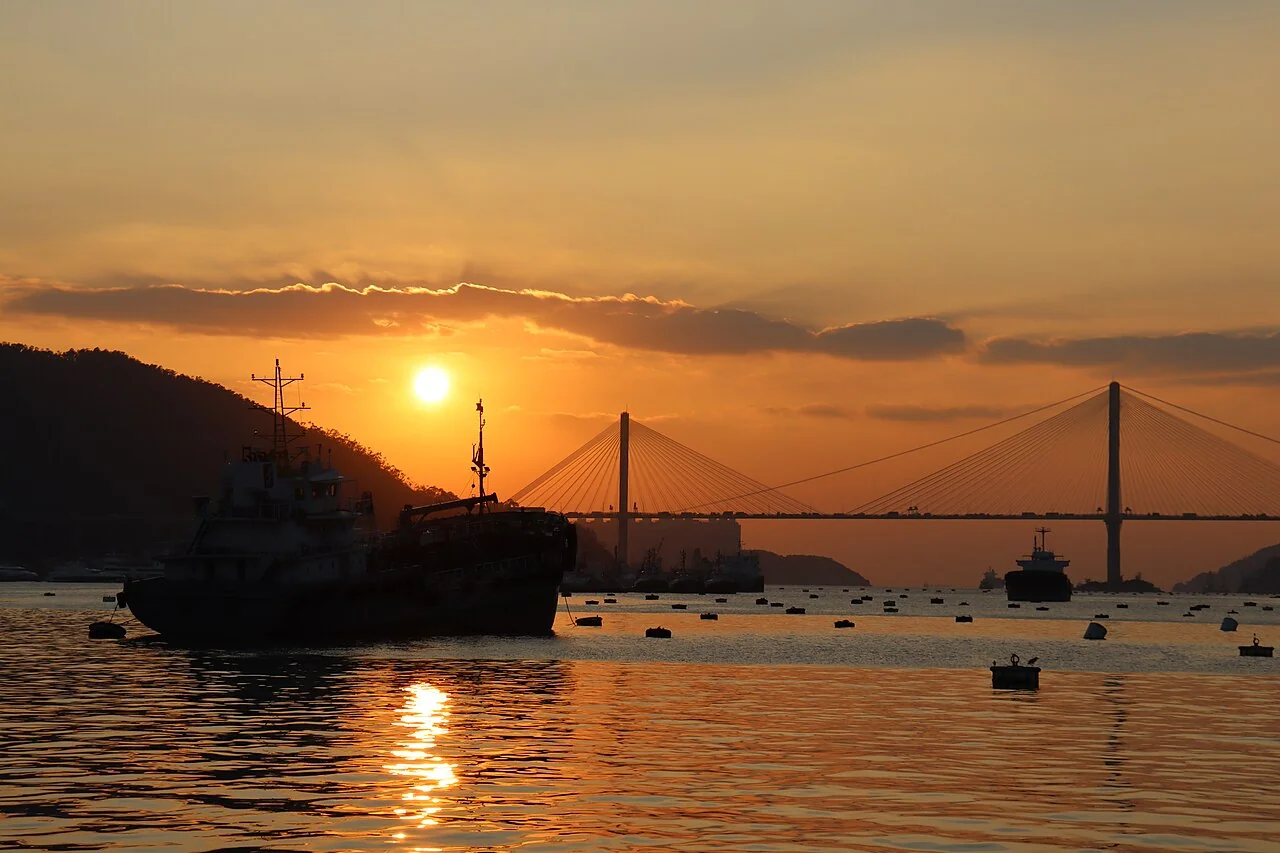
City sunsets are not about an empty natural horizon. Their appeal is the skyline in the foreground, with warm light between buildings and urban lights appearing as the sky darkens.
- West Kowloon waterfront: Open public spaces offer views across the western harbour. Allow for the walk from the chosen rail station and check current access.
- Cyberport waterfront: The southwest-facing shoreline provides evening sea views. The sun's position and nearby islands affect the composition through the year.
- Kwun Tong Promenade: A long waterfront gives views of the working typhoon shelter and evening city light. Check the walking connection from MTR stations.
For Kowloon waterfront context and access, see the shore-based sections of our Kowloon water activities guide. Cyberport is on Hong Kong Island and needs its own transport plan.
6. Season and timing
| Season | Typical sky conditions | Planning advice |
|---|---|---|
| October–December | Often drier, but haze, cloud and wind still vary | A useful planning period; check the day's forecast |
| January–February | Cooler weather, early sunsets and possible strong winds | Bring warm layers; clarity is not guaranteed |
| March–April | Fog, haze and low cloud can obscure views | Check visibility before travelling far |
| May–September | Later sunsets and potentially dramatic clouds, with unsettled weather | Respect thunderstorm and tropical-cyclone warnings |
How to time your visit
Hong Kong's sunset is roughly between late afternoon in winter and shortly after 7 pm in summer. For the exact date, consult the Hong Kong Observatory sunrise and sunset tables. A practical schedule is:
- Around 90 minutes before sunset: Aim to be at or near the viewpoint, with time to find a safe position. Start earlier if your journey is long.
- The final part of the hour before sunset: Warm, low-angle light can create strong silhouettes. The precise golden-hour duration depends on cloud and local terrain.
- Roughly 20–30 minutes after sunset: Blue-hour light and city illumination can be rewarding, but stay only if you have safe access and confirmed return transport.
7. Sunset from the water
A shore viewpoint may have trees, barriers or other visitors in the foreground. A suitable water-based viewpoint can feel more open, with a low perspective over the sea and the sound of paddles nearby. Islands, hills and cloud can still obscure the sun.
Guided sunset SUP outings around Pak Sha Chau offer this different perspective. The operator assesses conditions and participation requirements and adjusts meeting times for the season. Beginner suitability does not mean risk-free, and neither a clear sunset nor calm water is guaranteed.
👉 View the Pak Sha Chau sunset SUP tour for the current itinerary, meeting time and weather policy.
8. Safety and equipment
- Bring a torch or headlamp: Rural paths darken quickly. Carry a reliable light, but plan to leave difficult terrain before darkness rather than relying on lighting alone.
- Pack a layer: Exposed coasts can feel cool and windy after sunset, especially in winter.
- Plan the return first: Check the last ferry or local bus, allow for walking and queues, and keep an earlier option where possible.
- Do not climb beyond barriers for a photograph: Wet seawalls and wave-break blocks are slippery, and there may be no easy exit after a fall.
- Check whether water access is appropriate: Lung Kwu Tan and Ha Pak Nai are shore-based choices. For a water activity, use an authorized launch, appropriate equipment and suitable professional supervision.
- Insect protection: Mosquitoes can be troublesome near mudflats and vegetation at dusk. Use suitable repellent according to its instructions.
9. Frequently asked questions
Where is the best sunset in Hong Kong?
It depends on the scene: Sai Kung for bays and island silhouettes, the western New Territories for estuary views and mudflat reflections, Cheung Chau or Lamma for an island afternoon, and city waterfronts for skylines. Check the seasonal sun direction and local obstructions before choosing a specific spot.
What time is sunset in Hong Kong?
It varies through the year, from late afternoon in winter to shortly after 7 pm in summer. Check the Hong Kong Observatory's table for your exact date. Arriving 60–90 minutes beforehand usually leaves time to find a safe position and enjoy the changing light, but travel time must be added separately.
Which season is good for sunsets?
Autumn and early winter often provide comfortable planning conditions, but visibility and clouds vary daily. Spring can be foggy, while summer can bring dramatic clouds alongside thunderstorms and tropical weather. A current forecast is more useful than a promise based on the month alone.
Can I watch sunset from the water?
Yes, on a suitably planned activity such as a guided Pak Sha Chau SUP outing. The low viewpoint is different from shore, but weather, hills and islands still affect visibility. Confirm participation requirements, safety arrangements and the return plan with the operator.
What should I bring?
Drinking water, a layer, a reliable light and suitable insect protection. For photography, a tripod can help where permitted without blocking paths. On a phone, adjusting exposure can preserve sky color, but do not sacrifice your footing or cross a barrier for a shot.