
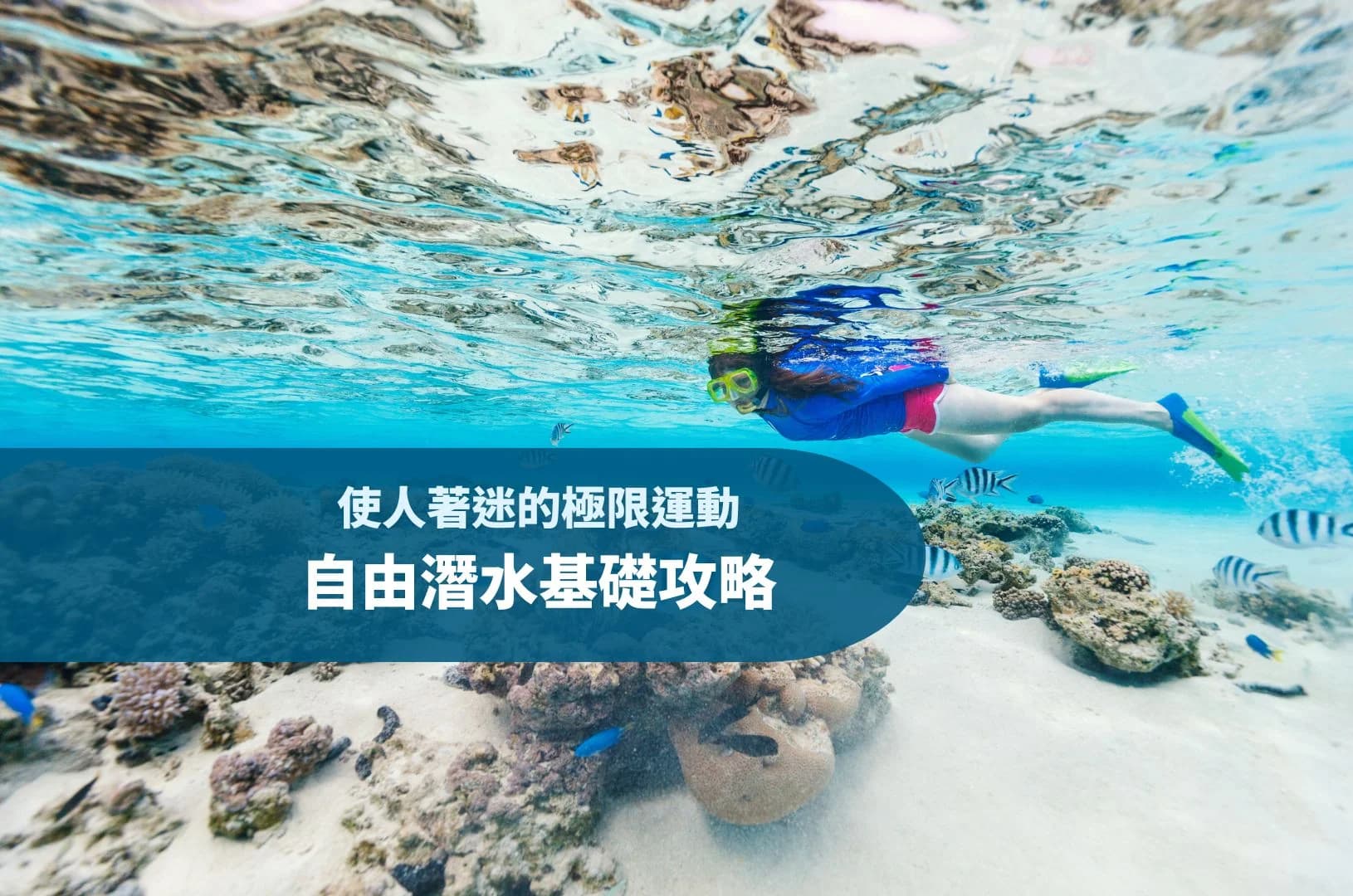
Freediving uses relatively simple personal equipment, but owning a mask, snorkel and fins is not enough to practise safely. Qualified instruction, appropriate safety equipment and a trained buddy are essential. This guide introduces CMAS, AIDA, PADI, SSI and Molchanovs, then explains basic equipment choices. Course standards can change: confirm current requirements with the agency and instructor, and never use performance figures as solo training targets.
You may have watched freedivers moving gracefully underwater without a scuba cylinder, their long fins making each movement look effortless. That appearance can be deceptive: the activity requires knowledge, preparation and safety support. A key principle is to respect your limits, rather than treating discomfort as something to defeat. Physical warning signs deserve attention, and mental calm is a skill to learn with qualified guidance. The attraction is not turning oxygen deprivation into a test of will, but finding controlled, responsible movement in an underwater environment that demands respect.
With that distinction in mind, here is an introduction to the training systems and equipment you may encounter.
CMAS, AIDA, PADI, SSI and Molchanovs: What Is Different?
Training organisations share many core safety concepts, but their courses, prerequisites and assessments differ. This overview is not a substitute for a current syllabus. Depth, distance and breath-hold results alone do not demonstrate that someone is ready to dive independently.
CMAS
Founded in 1959, CMAS is a long-established international underwater federation. Its work spans training, sporting disciplines and science, with sport and technical committees alongside a scientific committee. These cover different aspects of underwater activity, including freediving, sport fishing, finswimming, underwater rugby and underwater hockey. CMAS supports competition rules, training standards and scientific work; it is not the only organisation involved in international freediving events or records. Ask the relevant national federation which freediving programme and standards apply to your course.
Focus: underwater sport, education and scientific activity
Recognition: confirm acceptance and any crossover requirements with your intended dive centre; no rating guarantees acceptance everywhere.
| Programme level as named in the original guide | Confined-water assessment | Open-water assessment |
| CMAS Level 1 breath-hold diver | Introductory breath-hold, movement and safety skills; confirm the current federation syllabus. | Confirm whether an open-water component is included. |
| CMAS Level 2 breath-hold diver | Further confined-water skill and safety assessment; use the current programme requirements. | Depth skills and equipment use under an authorised instructor; confirm the applicable standard. |
| CMAS Level 3 breath-hold diver | More advanced skill assessment; do not use an old performance table as a training prescription. | Confirm the disciplines, depth requirements and rescue skills included in the current course. |
| CMAS Level 4 breath-hold diver | Programme names and availability may vary by federation; confirm the exact certification offered. | Ask for the current written prerequisites and assessment criteria before enrolling. |
AIDA
Established in 1992, AIDA focuses on freediving, including education and competition, rather than offering a scuba-diver training ladder. Its courses develop knowledge, technique and safety practices progressively.
Focus: freediving education and development
Recognition: check the requirements of the centre or course you intend to join next.
| Course | Training overview — confirm the current syllabus |
| AIDA1 Freediver | Introductory knowledge, relaxation and supervised water skills. Confirm current completion criteria with the instructor rather than assuming a timed or distance target from an old table. |
| AIDA2 Freediver | A structured beginner course covering theory, confined-water skills, open-water technique and buddy safety. Ask for the current performance and rescue requirements. |
| AIDA3 Freediver | Further development of technique, physiology, planning and safety. Check prerequisites and all current assessments before booking. |
PADI

Founded in 1966, PADI is a widely known diving-training organisation. Its freediving courses form a separate progression from its scuba courses, from introductory confined-water learning through more advanced training.
Focus: recreational diving education
Recognition: widely encountered internationally, but confirm the specific certification accepted by your provider.
| Course | Pool / confined-water overview | Open-water overview |
| Basic Freediver | Introductory confined-water training. PADI describes goals of a 90-second static breath hold and a 25-metre dynamic swim: 25 metres is distance, not depth, and these are supervised course activities. | No open-water depth component in this subset course. |
| Freediver | PADI describes confined-water goals of 90 seconds static and 25 metres dynamic, alongside technique and safety learning. | Free-immersion and constant-weight training, plus buddy and rescue skills; confirm the current depth criteria with the instructor. |
| Advanced Freediver | Further static and dynamic development. Published PADI material lists 2 minutes 30 seconds and 50 metres for adults, with different criteria for under-18s; confirm current standards. | Deeper supervised technique and rescue work. Published material lists a 20-metre goal for adults and 15 metres for under-18s; the current syllabus governs. |
| Master Freediver | Advanced theory and skill development, including static and dynamic work. Confirm all current prerequisites and completion requirements. | Advanced depth, buddy and rescue training. Official publications from different dates give different depth figures, so obtain the current standard directly rather than relying on an older comparison table. |
SSI

SSI was founded in 1970 and offers both scuba and freediving education. Its current recreational freediving course names differ from some older Level 1–3 comparisons. Ask a centre to identify the exact programme being offered.
Recognition: confirm acceptance and any equivalency assessment with the receiving centre.
Founded: 1970
| Course / older label | Confined-water focus | Open-water focus |
| SSI Basic Freediver | Introductory skills such as breath-hold awareness, finning, dynamic movement, duck dives and safety, within the actual programme’s scope. | Confirm the programme’s setting and limits with the instructor. |
| SSI Freediver (older Level 1 terminology) | Foundational technique and buddy skills; confirm the current assessment requirements. | Beginner open-water skills; depth and prerequisites are governed by the current instructor standards. |
| SSI Advanced Freediver (older Level 2 terminology) | Further technique, knowledge and confined-water practice; current requirements include prior certification and logged experience. | Current published training information lists a maximum training depth of 30 metres; progression depends on skill, conditions and instructor assessment. |
| SSI Performance Freediver (older Level 3 terminology) | Advanced technique and safety development, subject to prerequisites and current assessments. | Current published information lists a maximum training depth of 40 metres. This is not a target to attempt without appropriate training and supervision. |
Molchanovs

Molchanovs combines freediving education, ongoing training and equipment. Its Lap courses focus on pool skills, while Wave courses include open-water depth training. Confirm the exact course version, prerequisites and full safety assessments with your instructor.
| Course | Pool requirements — supervised course assessments | Open-water requirements — supervised course assessments |
| Wave 1: Beginner | The programme introduces static breath holding and dynamic technique; confirm current distance criteria with the instructor. | Published programme depth range: 12–20 metres, with technique and safety training. Confirm the full assessment list. |
| Wave 2: Advanced | Further static, bi-fin and no-fin work. The programme develops breath holds beyond 2 minutes 30 seconds under supervision; obtain the current full requirements. | Published programme depth range: 24–30 metres. Additional disciplines and rescue criteria apply. |
| Wave 3: Master | Published pool assessments include static 3 minutes 30 seconds, bi-fin dynamic 75 metres and no-fin dynamic 50 metres, plus the required theoretical work. | Published requirements include bi-fin constant weight and free immersion at 34–40 metres, no-fin depth 25–30 metres, buddying at 20 metres and rescue with a surface tow. Specified cold-water adjustments and all other course requirements also apply. |
Where Should a Beginner Start?
Choose an instructor for their current qualifications, safety procedures, teaching style and willingness to progress at your pace. Ask about group size, trained buddy cover, rescue equipment, medical screening and what happens if you need more practice. Never practise underwater breath holds alone, and do not hyperventilate to extend a dive.
First Equipment Choices: Mask and Snorkel
The original author had an uncomfortable experience with one budget mask-and-snorkel set: strap adjustment was awkward and the snorkel attachment pulled on the mask seal. That is an individual fit experience, not a verdict on every product from a retailer. The practical lesson is to test the actual model on your own face.
If the strap or snorkel attachment feels awkward, ask the shop to demonstrate correct adjustment before deciding the design is unsuitable.
Visit a specialist shop if possible and check comfort, seal and ease of adjustment. Choose a suitable mask by fit and visibility rather than assuming a particular colour will attract or repel marine life. Snorkels include dry-top and open-tube designs. A dry-top mechanism is intended to reduce water entry at the surface, but is not a substitute for clearing skills or proper freediving technique. It may suit surface snorkelling, depending on the model and user. A simple open-tube snorkel has no top shut-off valve and is commonly chosen for freediving surface use. Learn clearing and snorkel-removal procedures with your instructor; equipment alone does not make breath-hold diving safe.
Do Fins Make Swimming Effortless?
Fins take practice. A new user may feel uncoordinated or tire quickly if the blades are too stiff or the technique is inefficient. Choose a comfortable foot pocket and appropriate blade stiffness, then learn controlled finning. Better technique can reduce unnecessary effort, but should not be used as a reason to push breath-hold limits.
Further reading: Choosing Diving Fins
Begin with supervised snorkelling if you need to become comfortable with a mask and snorkel in the sea. For breath-hold diving, take a proper course and learn trained-buddy procedures rather than progressing alone after buying equipment.
Want to Start with Snorkelling?
Kayarine offers guided snorkelling and kayaking experiences in Sai Kung with equipment provided. These can introduce you to the sea, but they are not a substitute for a freediving certification course.