
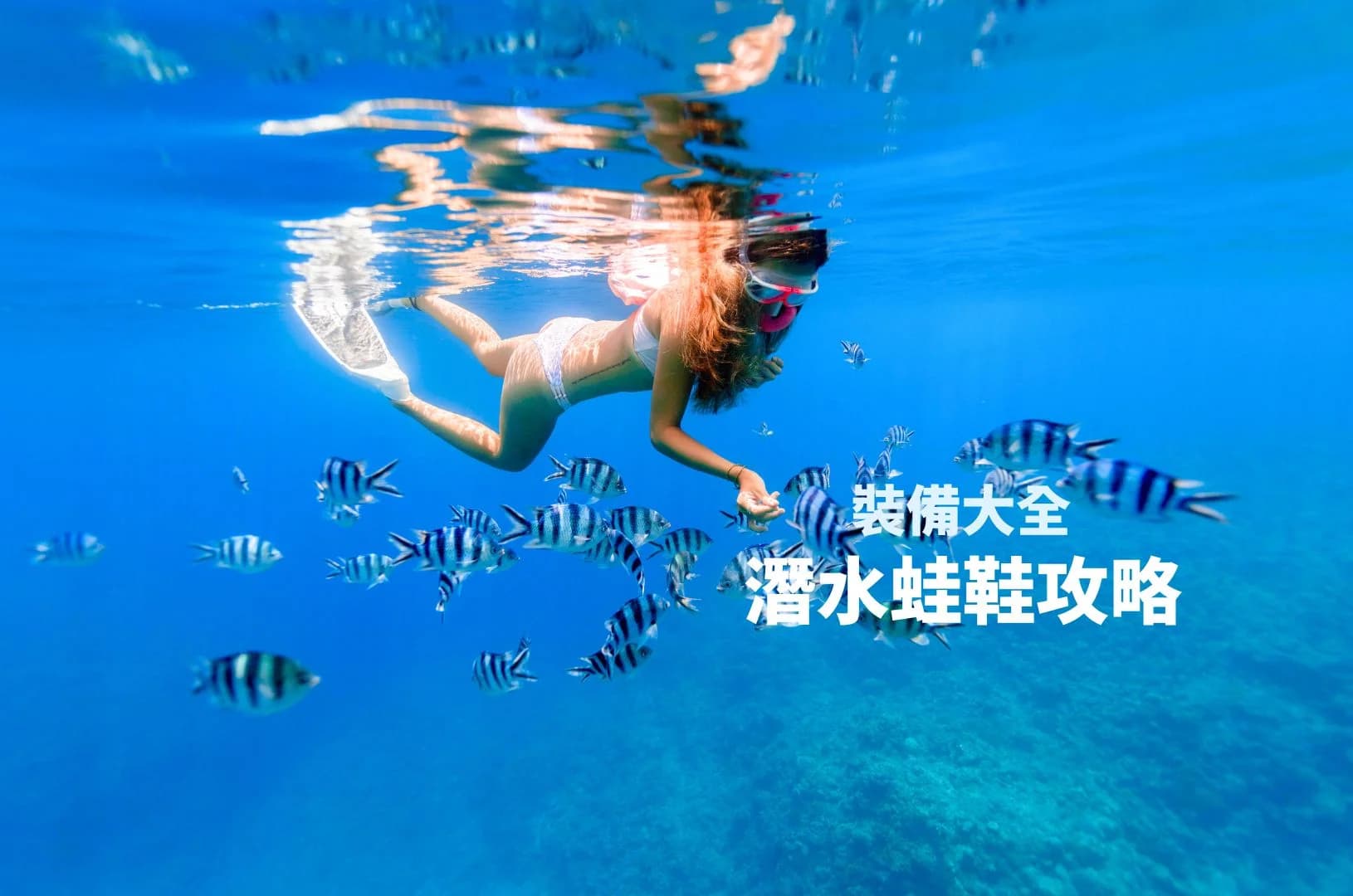
Fins, a mask and a snorkel are the three basic items of freediving equipment. Fins are often the most expensive and the hardest to choose.For your first pair, match the material—plastic, fibreglass or carbon—and foot pocket design to your budget, feet and experience. Plastic long fins costing under HK$1,000 can be enough to start. This guide explains materials, styles, technique, brands, seven selection criteria and care.
People often ask which freediving items they need to buy: fins, a mask, and a snorkel. Among these three essentials, long fins usually involve the biggest budget and the widest choice of brands. Here is how to begin choosing a pair that looks good and works for you.
Fin Materials: Plastic, Fibreglass and Carbon
Plastic fins: The most affordable option, with new pairs generally available below HK$1,000. They suit first-timers but tend to be heavier and less responsive, requiring more kicking effort than composite blades over a comparable distance. Designs are usually plain, with fewer visual options.
Fibreglass fins: Priced between plastic and carbon, with good options starting at a little over HK$1,000. Their improved response makes them a useful step up as technique develops. The material also allows translucent and colourful designs.
Carbon fins: Usually the most expensive, costing several thousand Hong Kong dollars. Their light weight and responsive flex appeal to divers pursuing performance. Depending on construction, quality and use, they may have a shorter lifespan than fibreglass blades.
Full-Foot vs Adjustable Fins
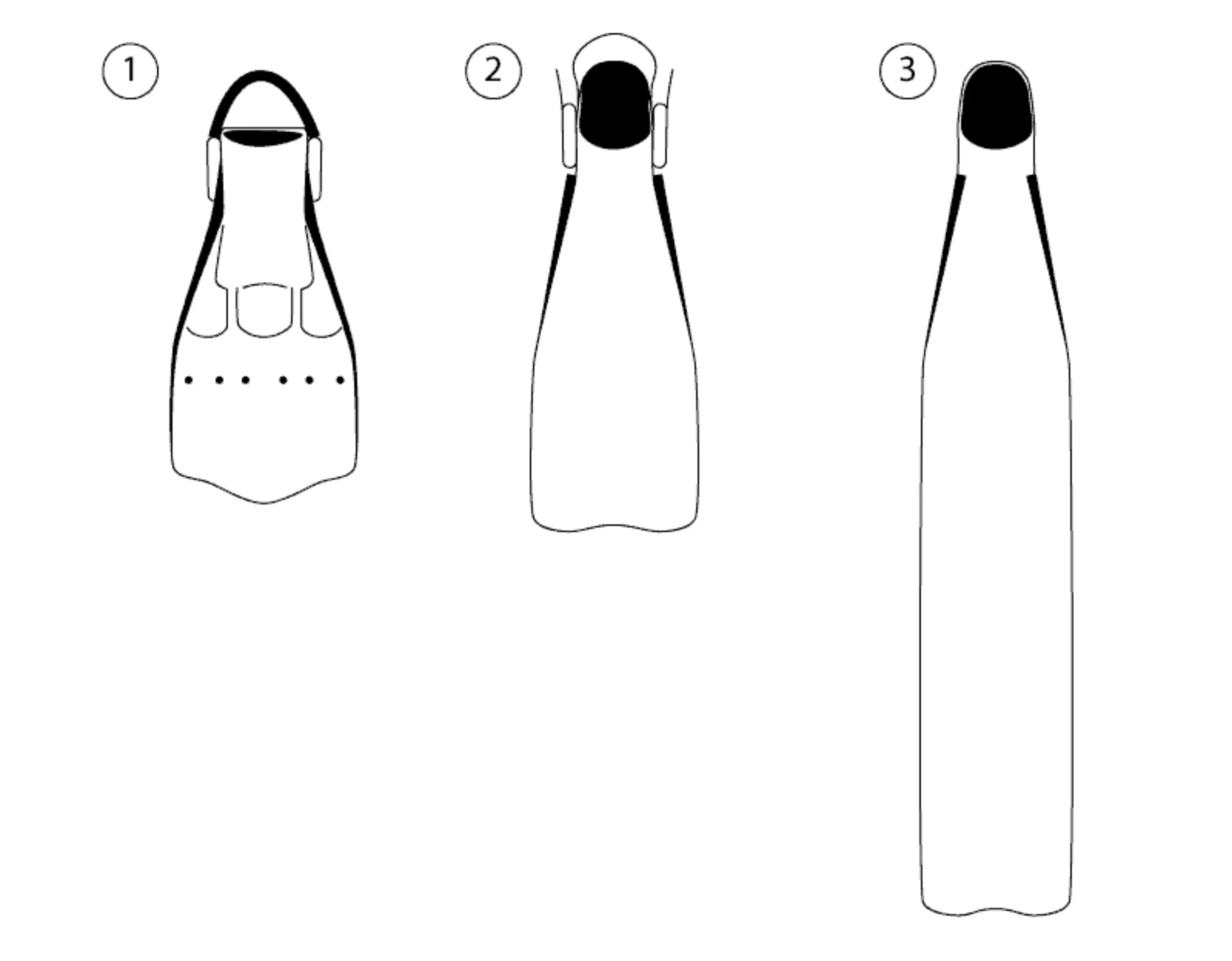
- Adjustable fins: Worn with suitable dive boots or socks, with a heel strap that adjusts the fit. They can accommodate different thermal equipment and are used in scuba diving and some freediving setups.
- Full-foot fins: Your foot slips directly into the pocket, giving a lightweight, natural feel. They are common in freediving and surface snorkelling.
Blade length and width also distinguish three broad styles. Freediving beginners commonly learn with long freediving fins:
- Jet fins: Short and stiff, often used in technical diving.
- Standard fins: General-purpose fins commonly used for snorkelling and surface swimming.
- Long freediving fins: Long, responsive blades designed for freediving.
Using Your Fins
Blade stiffness affects how a fin feels. Softer blades can make propulsion easier. Fibreglass and carbon freediving fins are generally long, so a slower, controlled kick gives the blade time to flex and spring back, helping convert movement into forward thrust.
Blade response describes how much useful propulsion a fin returns from your kick. Beginners do not need the longest or stiffest blade. A softer blade with a predictable response can make learning a steady kicking rhythm easier.
Long-Fin Brands
Brands found in the freediving market include:
- Sireniana
- Alchemy
- Molchanovs
- DiveR
- Lazyfish
Seven Criteria for Choosing Fins
- Ease of putting them on and taking them off: Consider how manageable the fins are when changing equipment in the water.
- Adjustment hardware: Straps and fittings should maintain a secure fit without coming loose while kicking.
- Comfort: A recreational session may last hours. Pressure points and rubbing can spoil the experience, so fit matters as much as it does with everyday footwear.
- Stability: Does the fin wobble or slip sideways as you kick? Can you maintain a controlled, straight movement?
- Blade response: Blades made from the same material can still feel different, and length also changes their behaviour.
- Acceleration: How efficiently does the fin turn your kick into forward motion, and how readily can you increase speed?
- Manoeuvrability: Can you change direction and move forwards or backwards comfortably?
Choosing Your First Pair
- Before your first course: Do not rush to buy. Many introductory experiences and courses include rental equipment, so try the activity first.
- Just starting to learn: Full-foot plastic long fins below HK$1,000 can be sufficient. Prioritise developing your kicking technique.
- Ready to upgrade: Fibreglass can offer good value. Consider carbon when you have a clear performance need.
- Sizing: Full-foot pockets should feel secure without pressing your toes. Allow for the thickness of any neoprene socks or other thermal equipment you plan to wear.
Care and Storage
- Avoid touching reefs or rocks, which can scratch or damage the blades.
- Choose a suitable place to put on and remove fins, with enough depth to avoid striking the bottom. Take care when kicking in shallow areas such as pools.
- After use, rinse or soak them in fresh water, keep them out of direct sunlight and dry in a ventilated place to reduce ageing and cracking.
- Use a fin case for storage and transport, or wrap the blades in clothing or towels for cushioning.
Frequently Asked Questions (FAQ)
Should beginners buy carbon fins immediately?
No. Carbon fins are expensive and can be less forgiving of damage. Before you develop sound kicking technique, you may not benefit from their performance. Plastic or fibreglass long fins are sensible starting options.
Are full-foot or adjustable fins better?
Full-foot fins are common in freediving for their light, natural feel. Adjustable fins can be more flexible if you also scuba dive or need boots in cold water.
Can I try the activity before buying equipment?
Yes. Choose an experience that includes equipment, then buy items gradually once you know what you enjoy. There is no need for a large initial purchase.
Ready to Explore the Water in Sai Kung?
Kayarine offers snorkelling and kayak experiences in Sai Kung with equipment and instructors. You can discover the underwater world without buying a full kit first.