
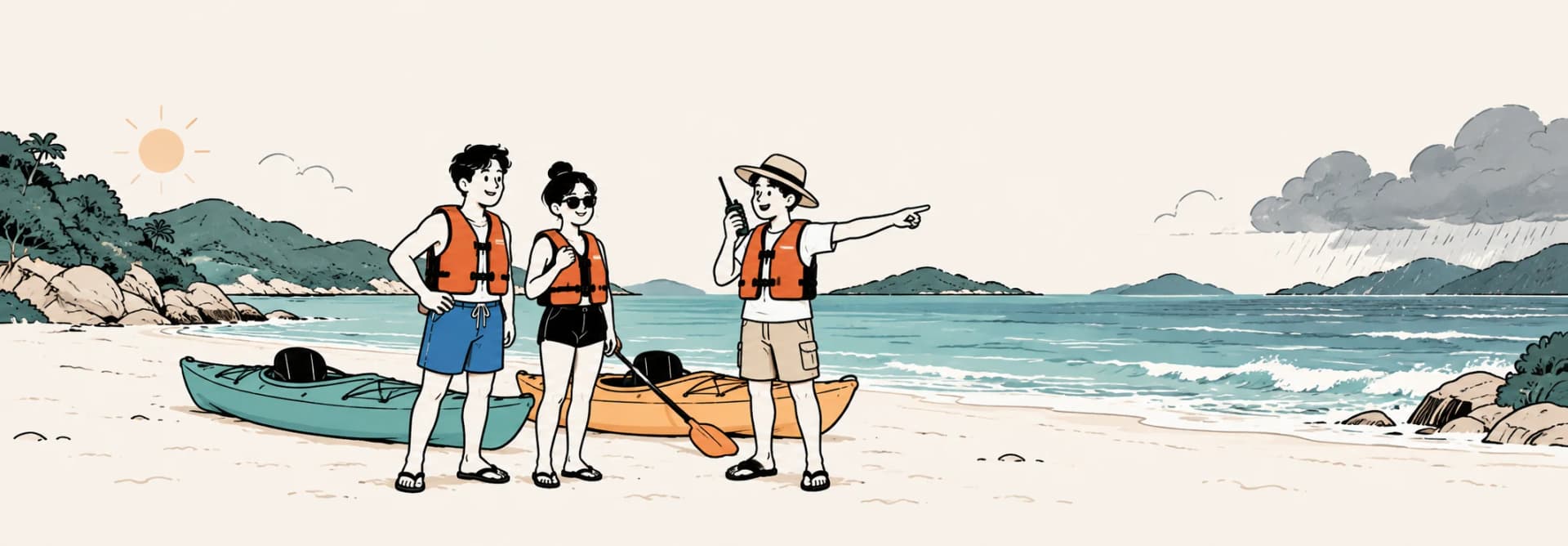
Weather is one of the most important planning questions for an outdoor group event. Agreeing on a clear decision process before booking makes it easier to contact participants, adjust transport and arrange another date if necessary. A confirmed itinerary should never become a reason to stay on unsafe water.
This guide separates safety decisions from booking arrangements. Weather warnings provide essential information; the actual route, sea conditions and participants also matter. Rescheduling and refunds are governed by the terms confirmed for your event, rather than by a general article.
Understand the warnings before departure
| Warning or condition | What organisers should do |
|---|---|
| Tropical cyclone warning, including Signal No. 1 | Do not interpret a low signal as permission to paddle. Follow the Hong Kong Observatory's coastal and water-sports precautions and contact the organiser. |
| Strong Monsoon Signal | Expect potentially strong winds and rough seas. Contact the team before travelling; do not proceed independently. |
| Amber, Red or Black Rainstorm Warning | Contact the organiser for instructions. Rainfall warnings alone do not describe the full condition of the sea or the journey to the venue. |
| Thunderstorms or approaching lightning | Stay off the water and follow instructions to reach appropriate shelter. If already afloat, follow the instructor's return-to-shore directions promptly. |
| Deteriorating wind, waves or visibility | Follow the instructor's decision to stop or return, even if no warning has yet been issued. |
The Hong Kong Observatory's tropical cyclone precautions and Strong Monsoon Signal advice are useful official references. Check the latest warnings on the day.
Look beyond the rain icon
Wind speed and direction affect how difficult it is to paddle and return. Offshore winds can carry paddlers away from land. Tide, currents, swell and landing conditions also need to be considered together; a tide height by itself cannot confirm that a route is safe. The instructor assesses the actual location and the group's ability.
Heat and ultraviolet exposure also need planning. Bring water and suitable sun protection, and allow the team to adjust the pace and breaks. A sunny forecast does not remove the need for a safety assessment.
Who decides whether to return?
Conditions can change after departure. The instructor monitors the group and the sea and gives directions if the activity must stop. Participants should stay together and follow the agreed procedure, rather than heading independently towards a landing point. Accounting for everyone and reaching safety come before photographs or completing the route.
The organiser's contact person should then receive the practical update and pass one consistent message to the rest of the group. Administrative questions can be handled once everyone is safe.
Arrange backup dates and written terms
Discuss one or two possible backup dates while planning. Confirm availability with the provider rather than treating them as automatically reserved. Agree who will make contact, when an update is expected and how transport or catering changes will be handled.
Before paying, ask for the applicable conditions in writing: the weather triggers, any free rescheduling provision, date availability, cancellation or refund rules, and what applies if the activity has already started. External transport and catering may have separate terms.
A short checklist for the organiser
- Keep the provider's contact details and a current participant list available.
- Share the latest joining instructions and weather update through one contact person.
- Confirm that colleagues know to wait for instructions before travelling in adverse conditions.
- Do not pressure the instructor to depart or finish a route because the group has already arrived.
Discuss your group's arrangements with Kayarine, or view the available activities.
Frequently asked questions
Does Signal No. 1 mean we can continue as normal?
No. Do not assume that a lower-numbered signal makes water activities safe. Follow the Observatory's precautions and contact the organiser for the event instructions.
Does light rain always mean cancellation?
Rain alone is not a complete safety assessment. Warnings, thunderstorms, wind, sea conditions and travel safety must also be considered.
Who makes the on-water decision?
Follow the instructor's directions, based on the current conditions and the group. Do not continue independently.
Can we choose backup dates in advance?
Yes, discuss them during planning, but confirm availability and the procedure for moving the booking.
Is every weather interruption fully refundable?
Do not assume so. Confirm the exact rescheduling and refund terms for your event, including the rules after departure and any separately booked services.